
For this Grower’s Spotlight, we’re excited to highlight one of our community partners, Louis Mennel, the founder of Carbon Compost. Louis moved to Pittsburgh in 2016 and has been helping to improve regional compost systems and soil health since 2021.
Grow Pittsburgh: What brought you to Pittsburgh and the local composting movement?
Louis: When I moved to Pittsburgh in 2016 I was working in the solar industry, but when covid hit, I had the time to reflect and saw an opportunity to get involved with a more hands-on community centred approach to climate solutions.
Growing up in California, composting was second nature. I’ve been composting my entire life. San Luis Obispo has had municipal green waste bins for at least 25 years and my parents always had a backyard bin. I even had a worm bin when I was young; it was definitely part of my hippie upbringing on the West Coast. In college, I spent summers working on small-scale organic farms that had compost systems so I was pretty comfortable composting.
For the first 5 years I lived in Pittsburgh, I threw my food waste into the garbage, which felt really strange. I knew that I wanted to start composting again, and as I dug into the environmental impacts of food waste, I realized there was a real opportunity to shift the narrative and help people see food scraps not as garbage, but as a valuable resource.
Grow Pittsburgh: What is composting, and why is it important?
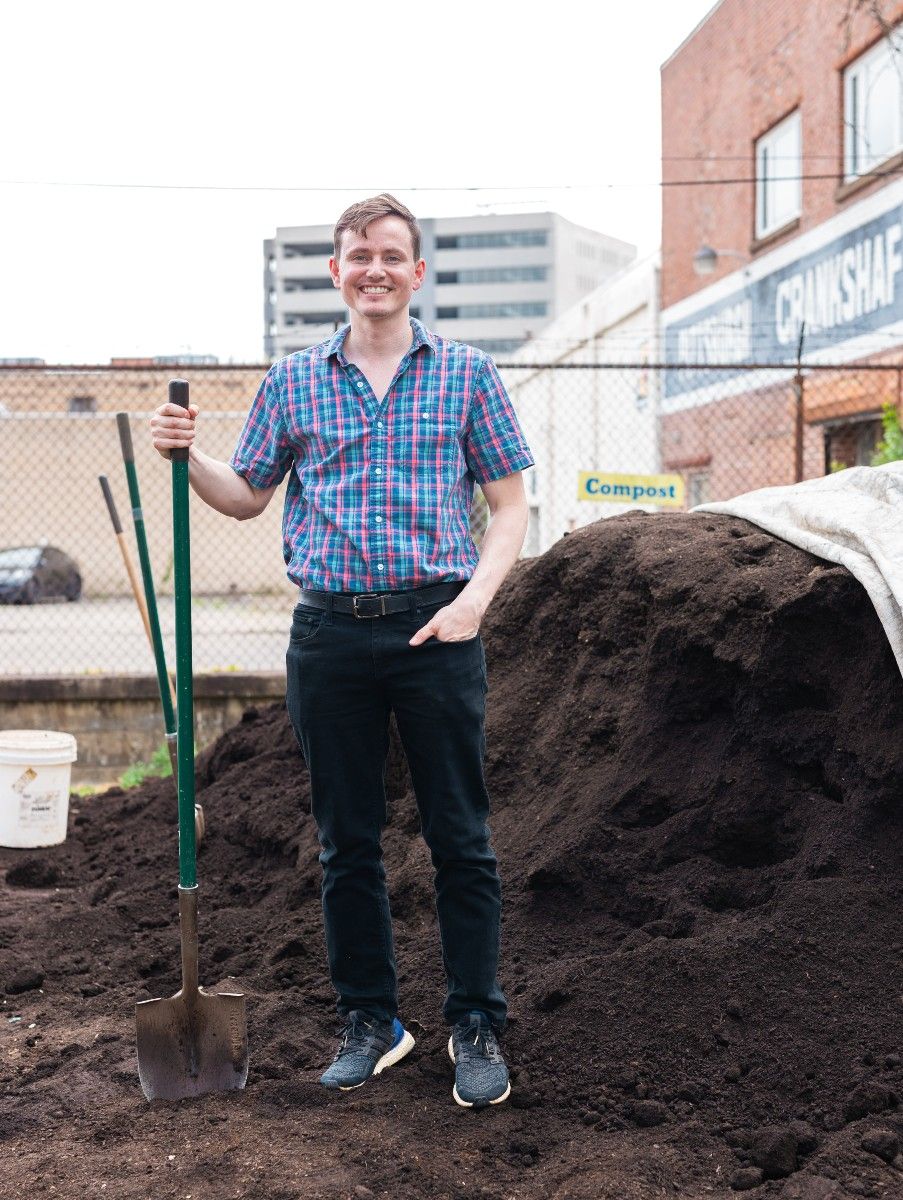
Louis: Composting is the process of recycling organic waste (food, yard waste, paper) into a rich, soil-like substance. It improves soil quality, retaining moisture, loosening up compacted soil, shoring up sandy soil, adding micronutrients that support root health – it’s just all around awesome.
More than 30% of all trash collected in Pittsburgh is compostable – the single largest component of municipal landfills. That material is often driven very long distances in inefficient garbage trucks to rot in a landfill. Without proper aeration, rotting food generates methane. Organic waste is responsible for up to 90% of landfill methane emissions, a greenhouse gas over 25 times more potent than carbon dioxide. I think we should talk about our methane footprint rather than our carbon footprint. Luckily, composting discarded food is a simple solution to reduce our impact.
Grow Pittsburgh: Tell us about your business, Carbon Compost.
Louis: At first, I thought about joining one of the amazing curbside composting programs already running in Pittsburgh. I met with a dozen organizations, many of which I still collaborate with today. Then I started working with Laura at Worm Return, and that’s when I really fell in love with the industry.
When I started Carbon Compost in 2021, I estimated there were less than 1,000 Pittsburgh homes participating in curbside composting programs. In comparison, Cleveland’s curbside composting program was picking up from 5,000+ homes. So I realized that there was a gap here and wanted to help fill it.
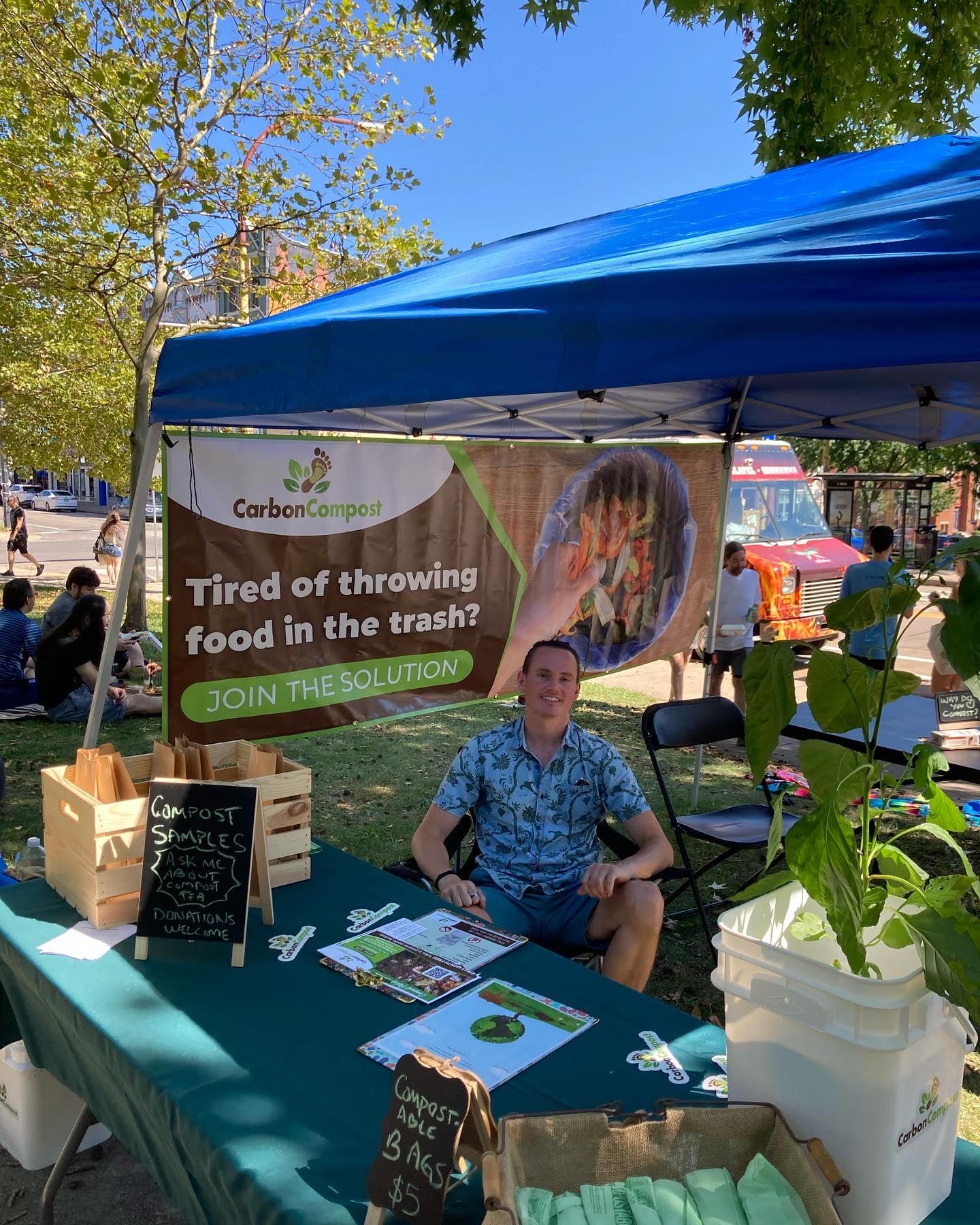
I started small, picking up compost from friends and processing it in my backyard. Word spread quickly as people noticed the curbside bins or talked to participating friends. I expanded from residential to commercial, and now we even provide zero waste services at events – like Grow Pittsburgh’s Garden Get Down!
In my first year of business, I collected over 2,000 pounds of food waste. As we grew we needed more space, so we moved from my backyard to a local community garden, and eventually to a larger private homestead. But the labor eventually became too much for us to manage by hand, there’s only so much we can manually move with pitchforks. That’s when we started working with AgRecycle, the largest commercial composter in the region and a critical partner in our operations.
The dream is to do it all in-house, but we’re not there yet. And the beauty of Pittsburgh is that everyone knows everyone and works together to make collective change. Even now, as we’re sitting here at the Garden Resource Center, some of the compost created by Carbon Compost is sitting to my right and being used by the community to grow delicious food.
Grow Pittsburgh: How has Grow Pittsburgh helped to support your composting journey?
Louis: I’ve taken a lot of garden and composting classes, but I’ve been blown away by Grow Pittsburgh’s educational programs. I’ve enjoyed the workshops that I’ve joined, especially the “Eat Your Garden Weeds” program at Shiloh last summer. And I joined the Community Compost School program in 2023. There were 10 other people in my cohort, all interested in starting or already operating public compost systems in their area. Even for someone with a year or so in the composting industry, who was familiar with the science and various techniques, the program took things to a whole new level.
We met once a month to dive into the science behind different methods of composting and to tour a local compost facility. It was a really honest approach where we could discuss the pros and cons of each system while helping to troubleshoot challenges at each site.
A full-circle moment for me was our visit to the Stanton Heights community compost site. I first learned about it in 2020 through Grow Pittsburgh’s Grower Spotlight on Mike Sturgis, who ran the site for over a decade. That article inspired me to reach out and volunteer regularly. Years later, returning to that same site as part of a capstone tour with my compost school cohort felt deeply meaningful.
Beyond education, Grow Pittsburgh has also been an early supporter of my business. This is my fourth year helping run zero-waste efforts at the Garden Get Down, and it’s become one of my favorite events of the year.
Grow Pittsburgh: What’s next for Carbon Compost?
Louis: A lot of times you start a business and you have a vision of what the problem is and what the solution is. And maybe you’re right, but if you’re a good entrepreneur, you listen to what the market has to say and you adjust. You create a solution to solve the problems that your actual customer base has.
Right now, we’re really excited to grow into the event and commercial space. There’s a lot of creativity in events because each one has different needs. And commercial sites can generate massive amounts of food waste, so there’s a lot of potential to reduce their methane footprint.
But we’re always looking to grow our curbside customer base. I think my first customer was in August of 2021, and by the end of the year we had 10 customers and had diverted 2,000 pounds of food waste from landfills. Last year, we had 285 curbside customers and have collectively diverted close to 300,000 pounds of food waste. That’s over a quarter of a million pounds of food scraps diverted just because a group of people said, “Hey, we want to do something about this.” And it feels really good to see that happen.
Grow Pittsburgh: Anything else you want to add?
Louis: I just want to give a big thank you to Grow Pittsburgh for supporting the urban agriculture community and having incredible resources, education, and access to help people in their sustainability journey. We’re all at different places, and they have resources for folks, no matter where you are on that journey. I’m grateful for this partnership and excited for many more years of mutual, beneficial support.
You can learn more about Carbon Compost and their programs on their website, carboncompostpgh.com.