
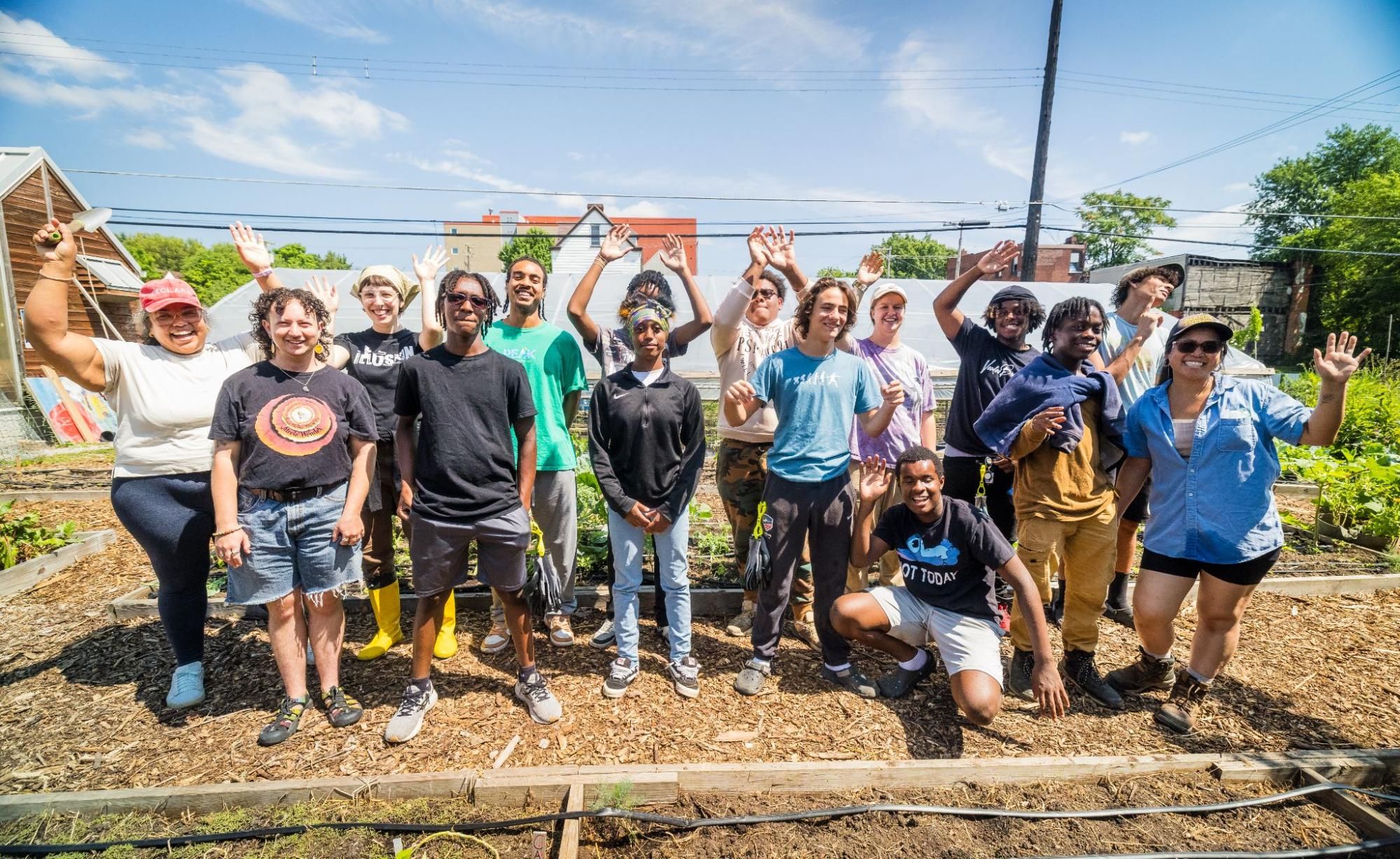
Oasis Farm
Last year, the City of Pittsburgh invested $3 million in public dollars directly into improving food security in underserved neighborhoods through the creation of its first-ever Food Justice Fund. Grow Pittsburgh was awarded a contract of $464,157 through this program to strengthen our local food system by helping residents throughout Pittsburgh grow their own food, access fresh produce, and improve their health in a time of continually rising costs.
Nearly half of this funding award (more than $204,000) was shared directly with five local Black-led organizations to support urban farms, community gardens, fresh produce stands, hands-on educational programs, and a food box program tailored for people with special medical needs. Here’s how those funds made a positive difference for people in Homewood.
Grow Pittsburgh is proud to be a long-time partner with three community-centered organizations in Homewood, which received Food Justice Fund support— Oasis Farm, Operation Better Block, and Sankofa Village Community Garden and Farm. We work together to ensure that fresh, affordable, and culturally meaningful food is within reach for every neighbor. The Food Justice Fund helped support fresh local food through a farmers market each Saturday from June through October, which served more than 940 residents.
The Food Justice Fund grant enabled Oasis Farm to provide hands-on education, job training, and fresh food distribution throughout the summer. The farm engaged 154 children and youth, ages 3–24, offering a range of programs, including environmental education and sensory-based learning, as well as its flagship Field2Fork Urban Farming Academy. Nine teens and young adults completed paid agricultural internships, gaining meaningful work experience and building leadership skills. Younger kids learned about composting and how food systems work through local camp partnerships.
The funding also helped Oasis improve food access for residents through weekly produce distributions at the Homewood Farmers Market, Grow Pittsburgh’s Shiloh Farm Stand, Everyday Café, and Bible Center Church. Their new workshare volunteer program provided fresh produce in exchange for farm support, creating a more accessible alternative to traditional CSA models.
Thanks to the City’s funding, Operation Better Block (OBB) deepened its impact through the Junior Green Corps (JGC), a program that teaches Homewood youth about farming, food systems, and community leadership.
This year, the Junior Green Corps engaged 30 teenagers, who helped operate a weekly Wednesday farm stand, studied local food challenges, and grew their own produce. Students managed the farm on Frankstown Avenue, producing over 500 pounds of fresh veggies, including collards, tomatoes, Swiss chard, basil, and kohlrabi. Their research helped identify the need for more culturally relevant foods in schools and neighborhood markets.
Through a partnership with the University of Pittsburgh’s Homewood Community Engagement Center, youth also developed shelf-stable food products for the Bulldog Store at Westinghouse High School, which serves 50–75 students daily.
OBB also supplied produce to the Westinghouse food pantry, operated with Homewood Children’s Village, which served more than 50 families.
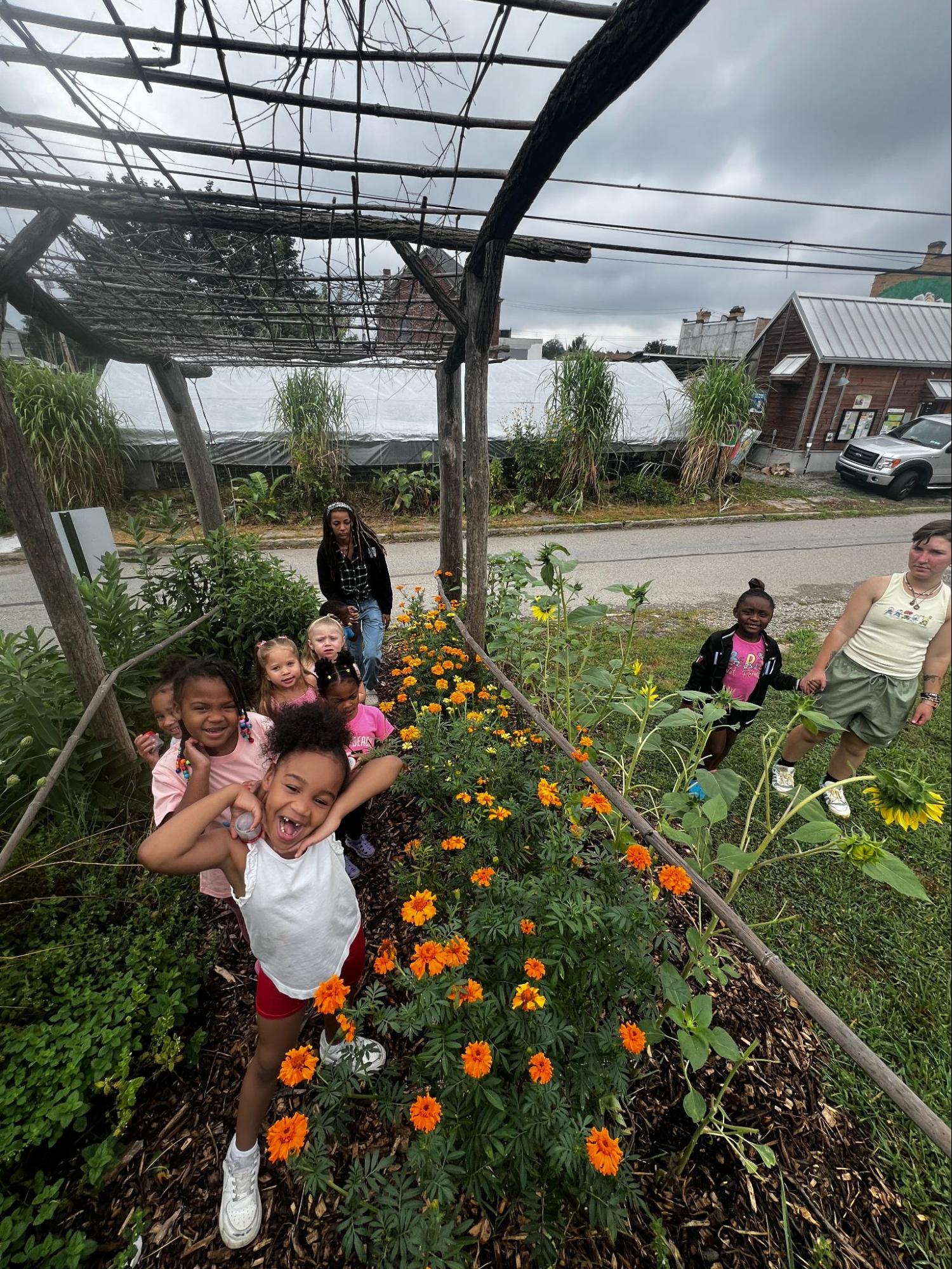
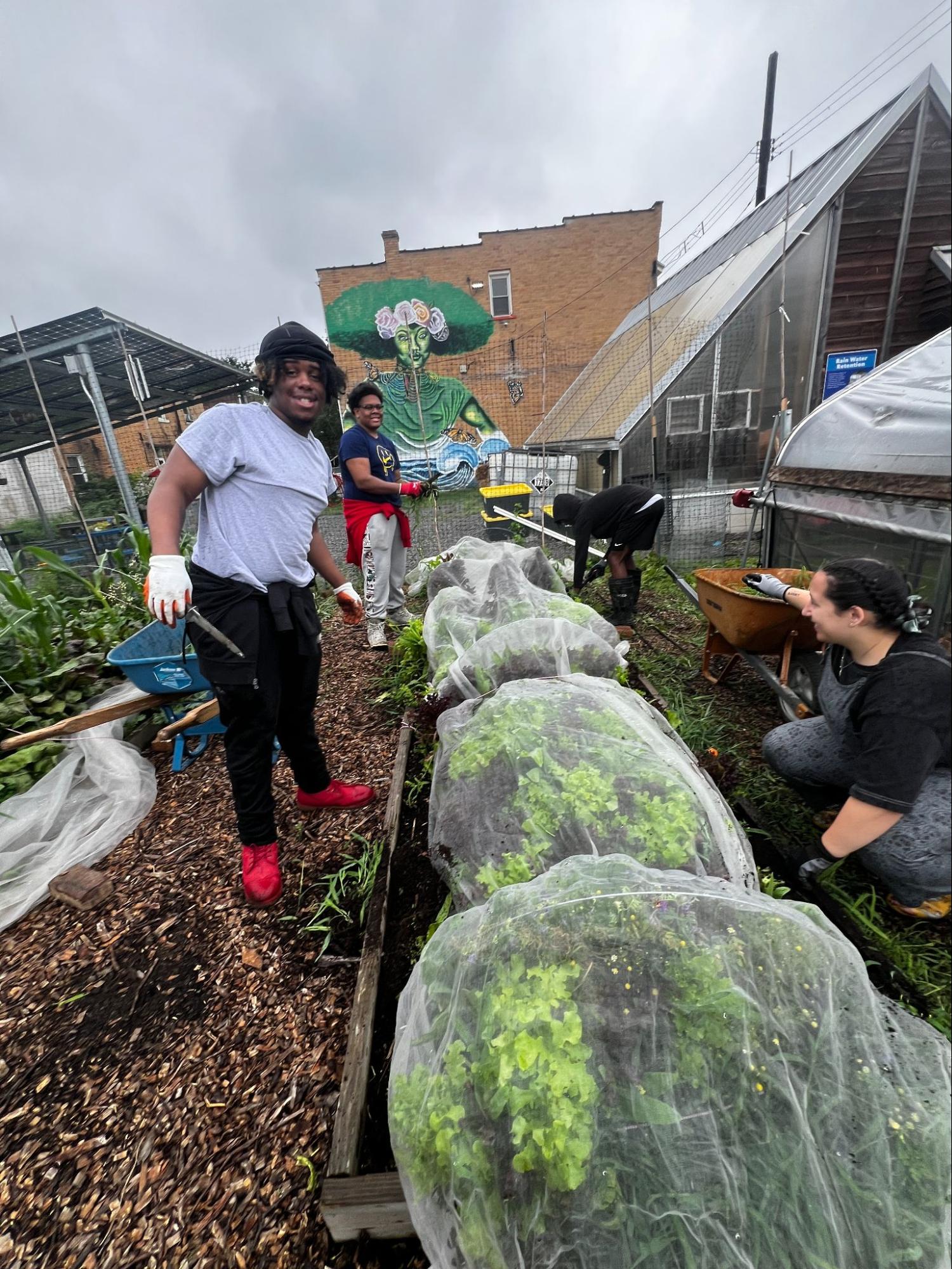
Operation Better Block youth program participants
Through a partnership with Learn and Earn, Sankofa Village Community Garden and Farm offered agricultural education, mentoring, and leadership training to as many as 25 young people. From June to August, youth workers ran a six-week community market where they learned skills in urban farming, food distribution, customer service, and small business operations.
Oasis Farm, Operation Better Block, and Sankofa Village Community Garden and Farm show what can happen when public investment supports community leadership. They are growing more than just food; they are helping build belonging, resilience, and lasting well-being in Homewood.